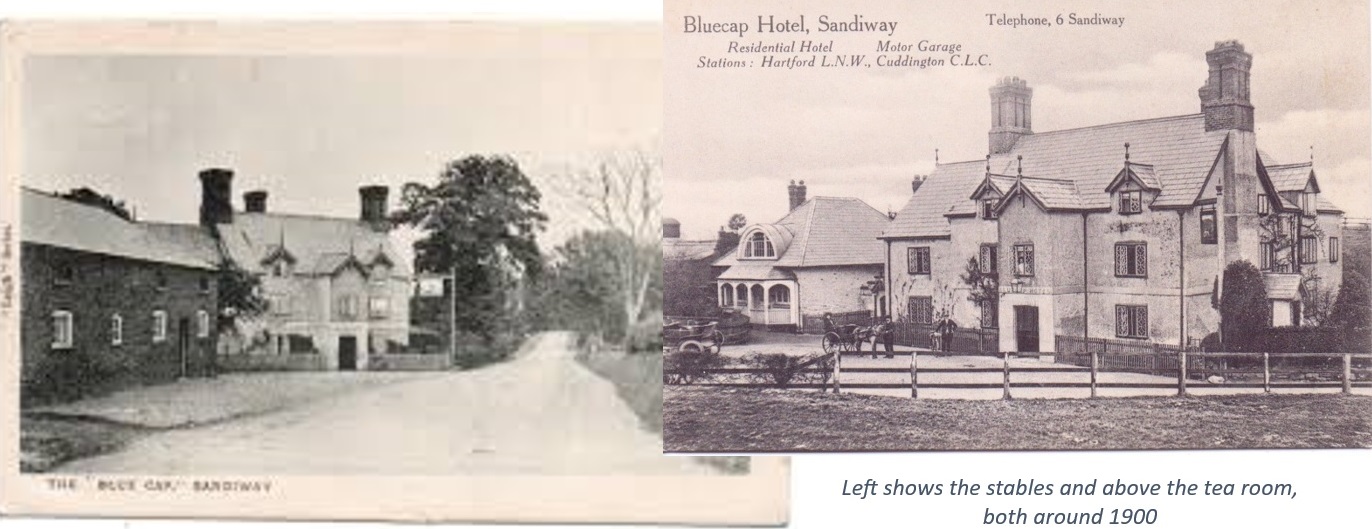
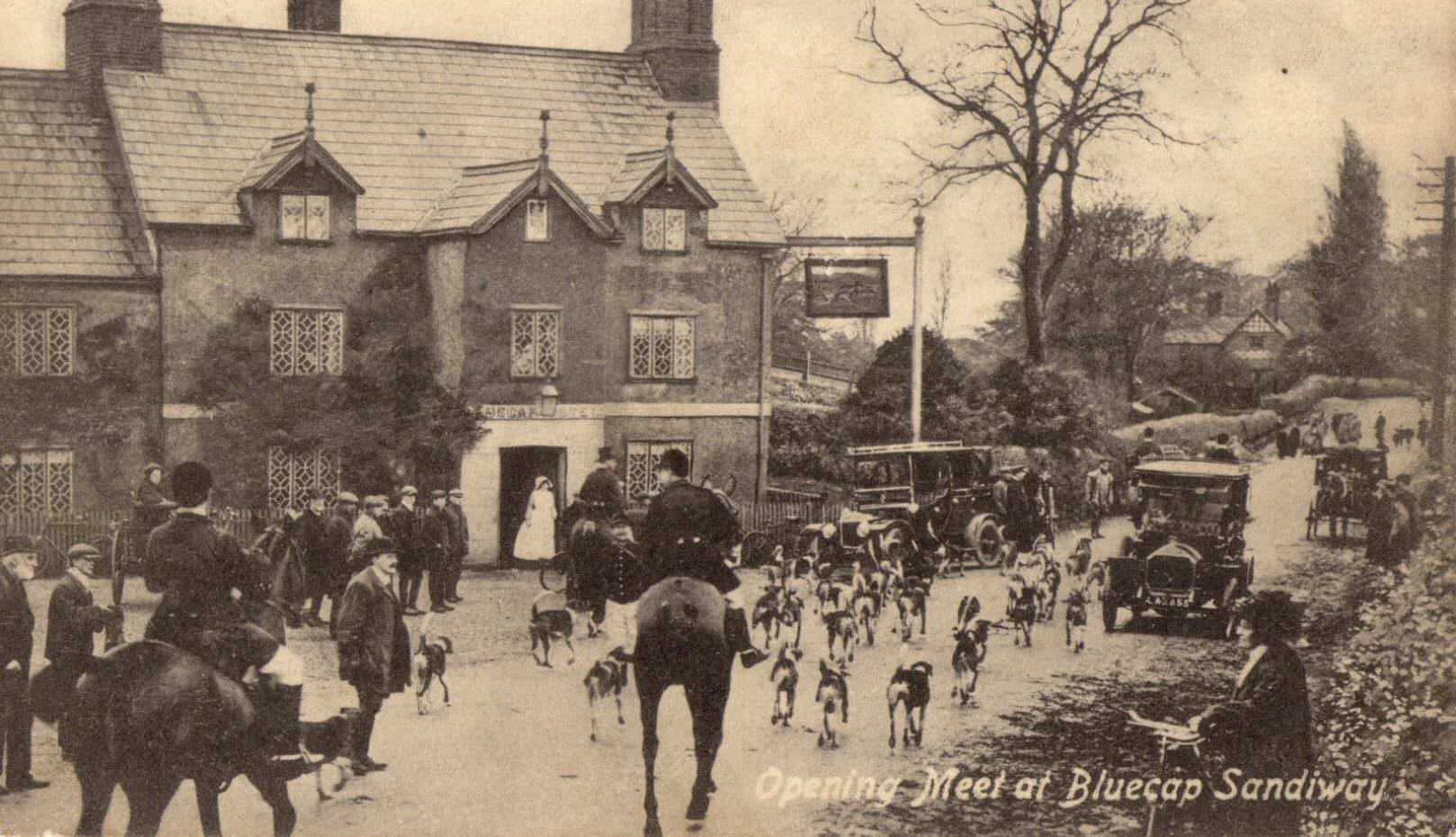
The Blue Cap on the A556 in Sandiway is one of Cheshire's oldest surviving inns. Its history stretches back well over 300 years. The traveller, Celia Fiennes in 1697 records that she ‘bated (lunched) at Sandy Lane Head’. Although the building dates from 1716, several sources suggest it stands on the site of an older inn which was known as the Sandiway Head Inn, serving travellers on the important coaching route between Chester and Manchester. In the 18th century the road was rough and mainly made up of sand and stones. Journeys were slow, making coaching inns vital stopping places for food, drink, horses, and overnight accommodation. Into the 1900s postcards of the Blue Cap show the stables and a tea room. In 1871, when the proprietor was William Roscoe, upwards of 70 horses could be stabled at the Bluecap Hotel. By 1903 the licensee was May Rose Middleton and she enlarged the inn to accommodate eight sleeping visitors. The Cheshire Forest Hunt used to have its opening meet at the Bluecap in early Autumn and the Cheshire Hounds met there from their nearby kennels at the end of Kennel Lane.
The photographic postcard below indicates what a noisy, bustling event the Hunts Opening Meet was:
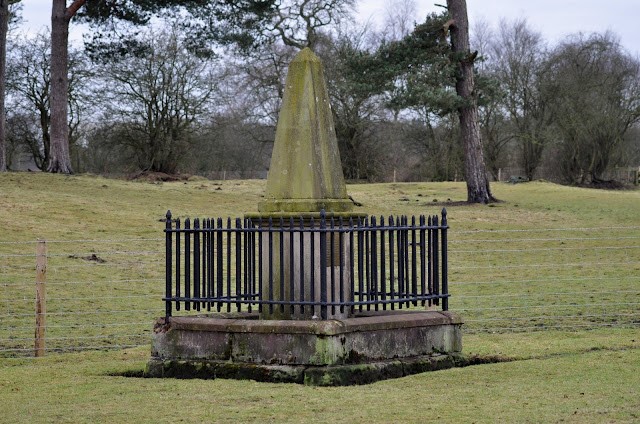
The Bluecap Memorial
The inn was renamed The Bluecap in 1822 by landlady Elizabeth Bull. The new name honoured a famous local foxhound called Bluecap. Four-year-old Bluecap belonged to John Smith-Barry from Marbury. In 1763 he wagered with Hugo Meynell that his hound could beat Meynell's dogs in a four-mile race at Newmarket. Bluecap won comfortably, earning legendary status throughout Cheshire and winning Smith-Barry 500 guineas. The dog became such a local celebrity that a memorial was erected in his honour. The Bluecap Memorial still stands near the Cheshire Hunt Kennels and is Grade II listed. It commemorates the famous hound and his 1763 victory.
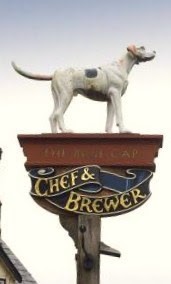
Not long ago, a metal model of Bluecap stood proudly on top of the Chef and Brewer sign for all to see as they passed by. It now stands inside the Blue Cap, near the entrance, where everyone is delighted to see him as they walk in.
Manchester United visit
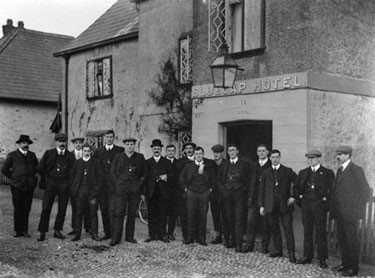
It is said that American General George S. Patton visited the pub on several occasions while inspecting troops stationed in the area during the Second World War and the Manchester United team stopped at the Blue Cap and had their photograph taken outside. The picture shows the Manchester United team outside the Blue Cap in 1906/7 - the man in the cap on the left is the famous Billy Meredith, the David Beckham of his day, who played for Northwich Vics in his early career.
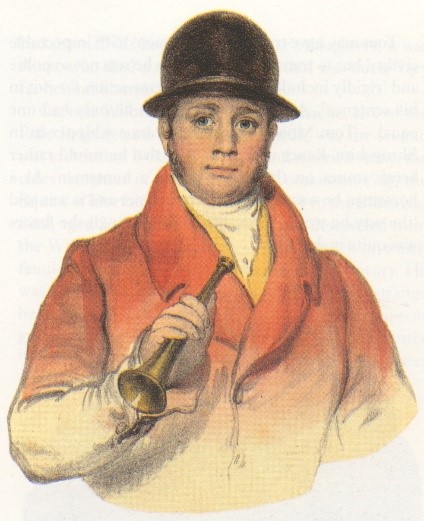
There have been many landlords over the years but the most celebrated licensee, although he was only there for two years, was Joe Maiden who took over the hotel in 1844 after twelve seasons as huntsman at the Cheshire Kennels. He was a brilliant sportsman and the way he overcame his infirmity was remarkable.
Landlord Joseph Maiden
One day in 1829 he had slipped with both legs into a boiling copper, stewing meat for the hounds. One leg lost half its calf to the bone and for many years Joe was in agony each night from the pain of his accident but he still hunted for six days a week. Twice he broke that leg and at one time or another had nine or ten pieces of bone removed from it. It was not until 1855 that he had the leg amputated and replaced by two cork ones, one for riding and one for walking. He returned to hunt service in 1846 for the North Staffordshire where he remained until 1955, the year before his death.
The Blue Cap, which became two words in more modern times, remains a prominent landmark in Sandiway. It was refurbished in 2026 but retains its historic character. Much of the original coaching-inn atmosphere survives through its stone-built structure, diamond shaped pains in small windows, low beams, and traditional layout. In the garden there is an old sandstone trough with a step up to it, surely a water trough for the many horses who have stopped there in times gone by. Not long ago the inn was painted a bright green by a new owner but a village outcry ensured the colour was soon changed back to its original white.
Thanks go to Jill King and Mark Bevan for permission to post.